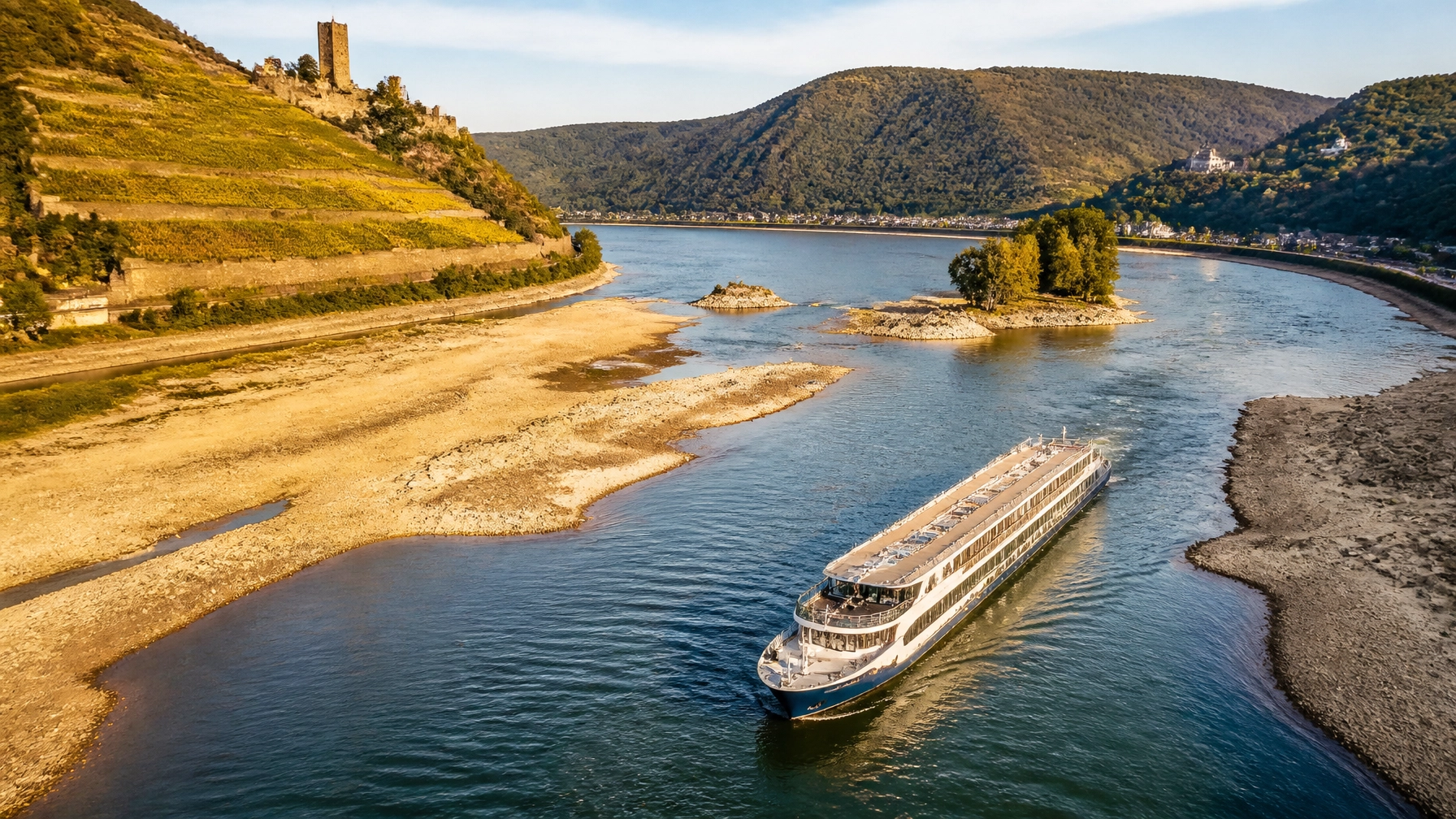
If you are booked on: or considering: a European river cruise this late summer or fall, you may be watching the headlines about drought, record-low river levels, and disrupted sailings. The concern is real, but it does not automatically mean your vacation will be canceled.
In August 2026, sections of the Rhine and Danube have experienced exceptionally low water levels. Cruise operators are responding with ship swaps, coach transfers, revised sightseeing plans, and, when necessary, hotel stays on land. Their goal is to keep guests moving and preserve as much of the planned experience as possible.
Here is what US travelers need to know before departure.
Standing note: River conditions can change quickly. The information in this article reflects the low-water situation reported in August 2026 and is for general travel guidance. Your cruise line’s latest operational notice, contract terms, and official travel documents always control.
Understand What Is Happening on the Rhine
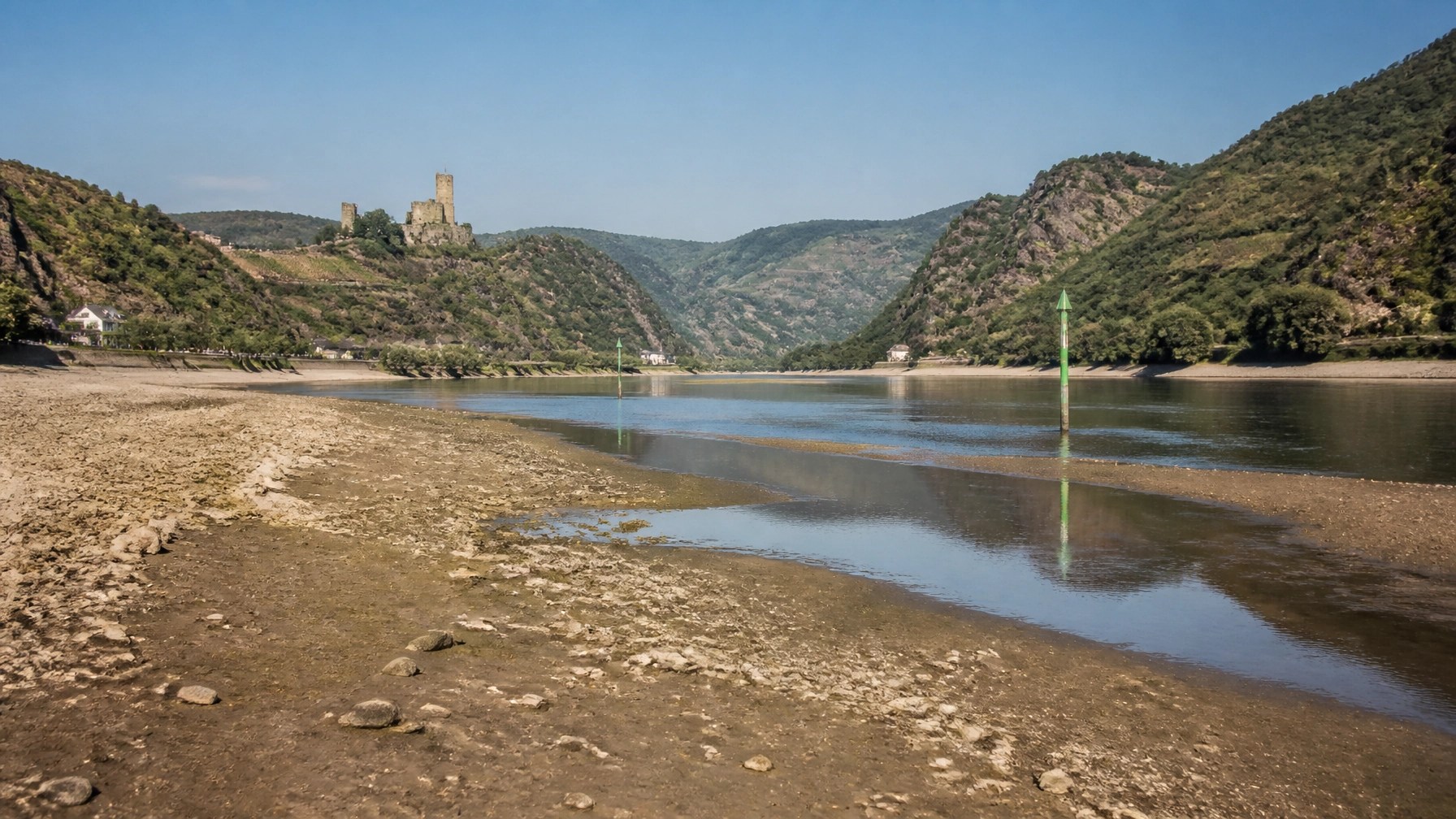
The Rhine has been the most visible problem area this month, particularly at Kaub, Germany. Kaub sits on a critical stretch of the Middle Rhine between Koblenz and Rüdesheim/Mainz.
According to reporting from Reuters and data summarized by river-cruise monitoring sources, the gauge at Kaub reached an extraordinary low of approximately 6 centimeters on August 17, 2026. That was below the previous record low of 25 centimeters recorded in 2018.
Rain later brought a modest recovery. By the end of August, readings had climbed into approximately the 70–72 centimeter range. That improvement is welcome, but the river remains below the roughly 77-centimeter low-water reference used for normal commercial navigation.
For travelers, the important point is simple:
- The Rhine is not necessarily closed everywhere.
- Conditions can vary from one section to another.
- A ship may be able to operate on one side of the low-water area but not pass through the shallowest section.
- Even when sailing continues, ships may need to reduce their draft or alter their plans.
This is why an itinerary can remain active while still changing from the original schedule.
Know Which Rhine Segments May Be Affected
The low-water concern is especially relevant to itineraries that include the scenic stretch between:
- Cologne and Koblenz
- Koblenz and Rüdesheim
- Rüdesheim and Mainz
Kaub’s location makes it a natural bottleneck. When water levels become too low, the river can effectively operate as two navigable sections rather than one continuous route.
That may affect:
- Sailing between northern and southern portions of the itinerary
- Arrival times at ports
- Castle-viewing schedules
- Shore excursions
- Evening departures
- Connections between the ship and airport or hotel
A cruise line may still deliver visits, meals, guided touring, and onboard services while changing how guests move between locations. The experience may be different from the brochure, but it is not automatically lost.
Watch the Danube, Too
The Danube has also faced low-water pressure in 2026, particularly near Pfelling on the Upper Danube between Regensburg and Passau.
Reports summarized from river monitoring sources indicate that Pfelling fell to approximately 194 centimeters on August 17, compared with a low-water reference near 290 centimeters. Levels later improved into the 230–240 centimeter range, but restrictions and navigation concerns continued.
The broader Danube route also requires close monitoring around:
- Regensburg and Passau
- The Pfelling area
- Bratislava
- The Bratislava–Budapest stretch
- Budapest
Conditions downstream can differ from those upstream. A cruise line may be able to sail one portion of a Danube itinerary while using transportation or hotel accommodations for another.
This is particularly important for longer Rhine–Main–Danube journeys. A low-water issue in one section can create a chain reaction involving ship positioning, port timing, and coach logistics several days later.
Expect Modified Operations: Not Automatically a Full Cancellation
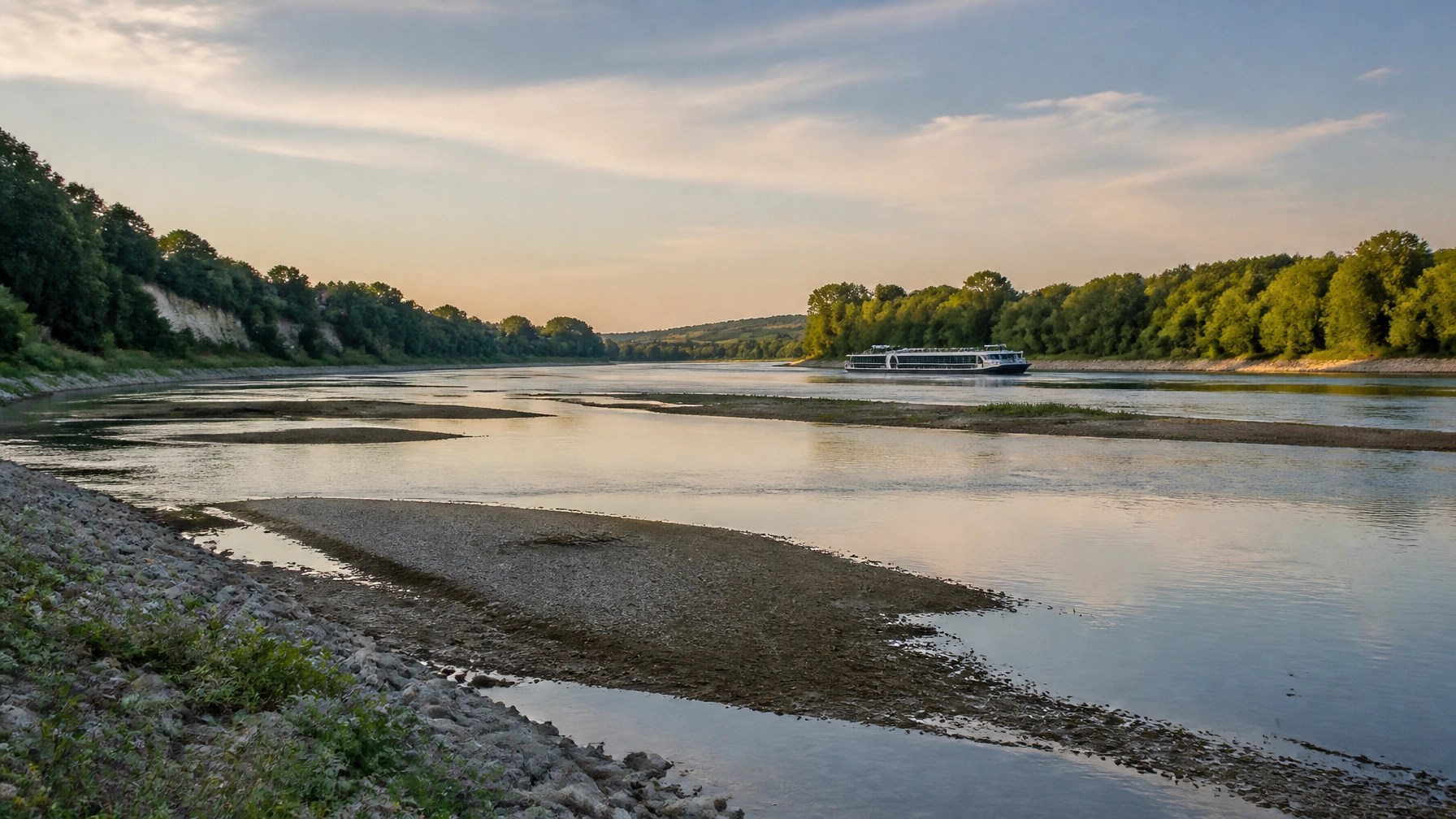
When a river becomes too shallow for a specific ship, cruise lines typically evaluate several options. The exact solution depends on the water level, the ship’s draft, the length of the affected section, available docking space, and the operator’s schedule.
Ship swaps
A ship swap allows guests to sail one portion of the route on one vessel and transfer to another ship beyond the shallow section.
You may:
- Disembark after breakfast
- Board a coach with your luggage
- Visit a planned city or attraction by land
- Rejoin the cruise on a second vessel
- Continue the itinerary with revised sailing times
The replacement ship may be similar but not identical. Your cruise line should explain how cabins, dining, luggage, and onboard services will be handled.
Coach transfers
Coaches may be used to reach a scheduled port, excursion, or city when the ship cannot dock or sail there.
For example, guests might:
- Sail as far as the river permits
- Travel by coach to a planned sightseeing location
- Continue by land to the next usable port
- Return to the ship later in the day
This can mean longer travel days, so wear comfortable shoes, keep medications in your carry-on, and carry water and essential personal items with you.
Hotel stays
If navigation is interrupted for more than a short period, the operator may use hotels in a nearby city while continuing the land-based portion of the program.
A hotel stay may replace:
- One or more nights onboard
- A scheduled sailing segment
- An overnight port stay
- Part of a city-to-city cruise connection
Keep in mind that hotel availability can be limited during peak travel periods. If your line makes this change, ask about hotel category, meals, transfers, luggage handling, and any included sightseeing.
How Travelers Are Protected
Your protection usually comes from three layers: the cruise line’s policies, your travel insurance, and active support from a knowledgeable cruise professional.
Review the cruise line’s policy
Read the terms connected to your booking and look for language regarding:
- Low water
- Itinerary changes
- Ship substitutions
- Missed ports
- Land transportation
- Hotel accommodations
- Refunds or future cruise credits
A change in route does not always trigger an automatic refund. Cruise lines often reserve the right to adjust ports, transportation, and sailing schedules when weather or river conditions affect safe navigation.
Check your insurance carefully
Travel insurance may treat low water differently from a full trip cancellation. Before departure, confirm whether your policy addresses:
- Trip interruption
- Missed connections
- Additional hotel nights
- Transportation delays
- Emergency expenses
- Cancellation for covered reasons
- Supplier default or itinerary changes
Ask specifically whether a modified cruise itinerary is covered. Do not assume that “the river is too low” will be handled the same way as a canceled sailing or severe weather event.
Use expert support
A cruise vacation expert can help you understand the difference between a manageable operational change and a situation that may justify rebooking.
At AHTRAVELSNYC, our role is to monitor updates, communicate with the cruise line, review available options, and help you make a decision based on your dates, route, insurance, and priorities.
That may mean:
- Staying with your current sailing
- Moving to a different departure window
- Selecting a shorter route
- Adjusting flights around a revised schedule
- Reviewing hotel and transfer details
- Helping with documentation if a swap occurs
You should not have to sort through every river report alone.
What To Do Before You Depart
If your cruise is scheduled for late summer or early fall 2026, take these practical steps now:
- Confirm your cruise line’s latest update. Ask about Kaub, Pfelling, and the Bratislava–Budapest stretch specifically.
- Request the contingency plan in writing. Find out whether ship swaps, coach transfers, or hotel nights are already anticipated.
- Build flexibility into your flights. Avoid tight connections on the day your cruise ends.
- Pack for movement. Use manageable luggage and keep essentials in a day bag.
- Carry medications and valuables with you. Do not place them in checked luggage during a transfer.
- Review insurance before departure. Verify coverage for interruption, additional transportation, and accommodations.
- Keep an open mind. The itinerary may look different while still providing a rewarding and well-managed vacation.
The Bottom Line for Luxury Cruises in 2026
The 2026 low-water situation is serious, particularly along the Rhine near Kaub and the Danube near Pfelling. However, river cruising is not automatically ending because water levels are low.
Operators have experience managing disruptions. Ship swaps, buses, hotels, and revised port plans are designed to keep the journey moving when continuous sailing is not possible. The most important thing is to understand the plan before departure and know who will help if conditions change.
If you are considering luxury cruises in 2026, or you already have a European river cruise booked, reach out to AHTRAVELSNYC before making a rushed decision. As your NYC and Cruise Specialist, we can review the current situation, discuss whether another travel window makes sense, and help manage the logistics from start to finish.
Contact AHTRAVELSNYC to receive personalized cruise guidance and a clear plan for your trip.
Leave a Reply