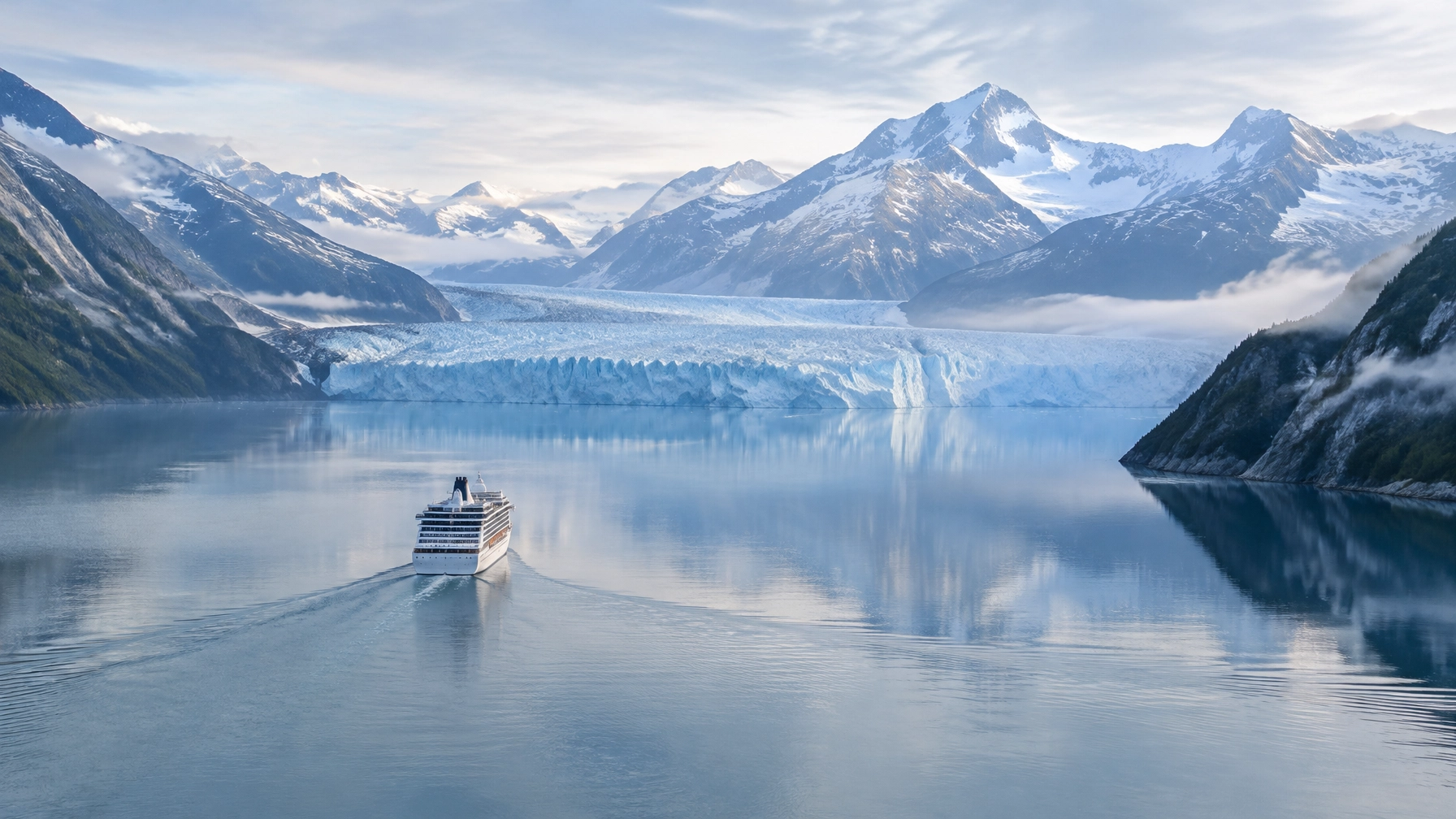
I’m Ayesha H, AHTRAVELSNYC’s NYC and Cruise Specialist. When clients tell me what stayed with them after an Alaska cruise, they often talk about the day the ship slowed near a glacier, or the still, misty morning they spent watching the coastline drift by. These are the days that make room for a different kind of travel: unhurried, immersive, and wonderfully hard to forget.
The best part of an Alaska cruise may be a day with nowhere to get off.
A sea day here isn’t an empty square on your itinerary. It’s a chance to settle into the scale and rhythm of Alaska: blue ice at the edge of the water, mountains fading into cloud, and the quiet thrill of spotting movement along a distant shore. You can step outside, warm up inside, then return to the view whenever it calls you.
And on a glacier day, the scenery becomes the day’s main event.
Glacier day: let the landscape set the pace
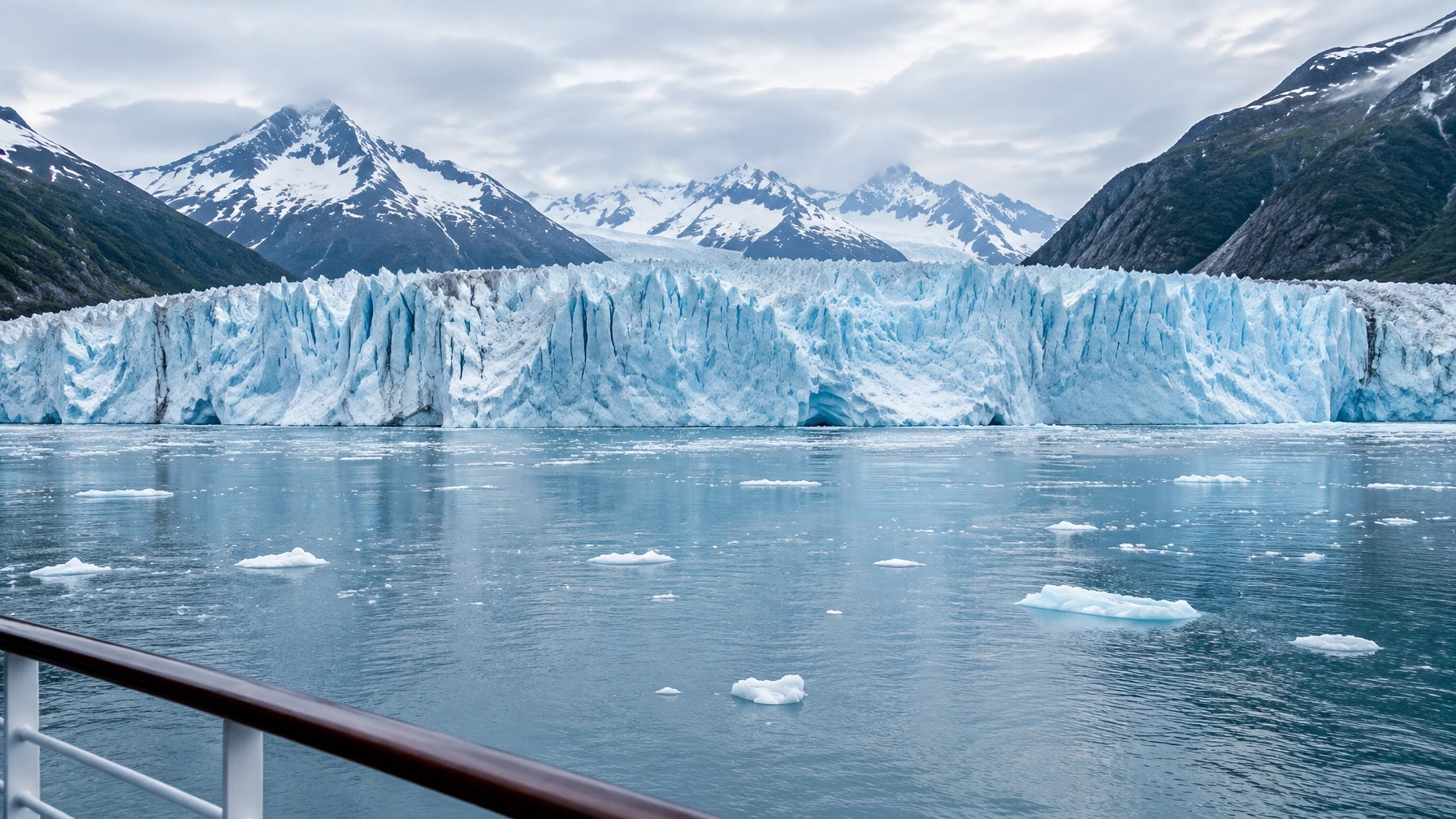
If your itinerary includes Glacier Bay, plan for a full day of scenic cruising. Ships don’t dock inside the park; instead, the ship travels through the bay, often spending around nine to ten hours there, including time near a major tidewater glacier. National Park Service rangers come aboard to share information about the park, its wildlife, and its natural history.
It’s a rare kind of sightseeing: your room, the decks, and the lounge can all become viewing spots. There’s no need to rush ashore or dash between attractions. The view changes slowly, but it changes constantly. A glacier’s sculpted face comes into focus; floating ice catches the light; a mountain ridge appears and disappears behind a veil of mist.
When the ship pauses near a glacier, listen for the deep, distant crack of shifting ice. Sometimes a piece breaks away and splashes into the bay. Sometimes the glacier simply holds the silence. Both moments are part of the experience.
Check your ship’s daily program for the approximate glacier approach and ranger talks. The National Park Service recommends being prepared for an early start and finding outdoor viewing areas, especially near the glaciers, where the scale and sounds are more immediate. Bring binoculars, too: distant shorelines can make wildlife and ice formations look smaller than they are.
A 7 AM view worth waking for
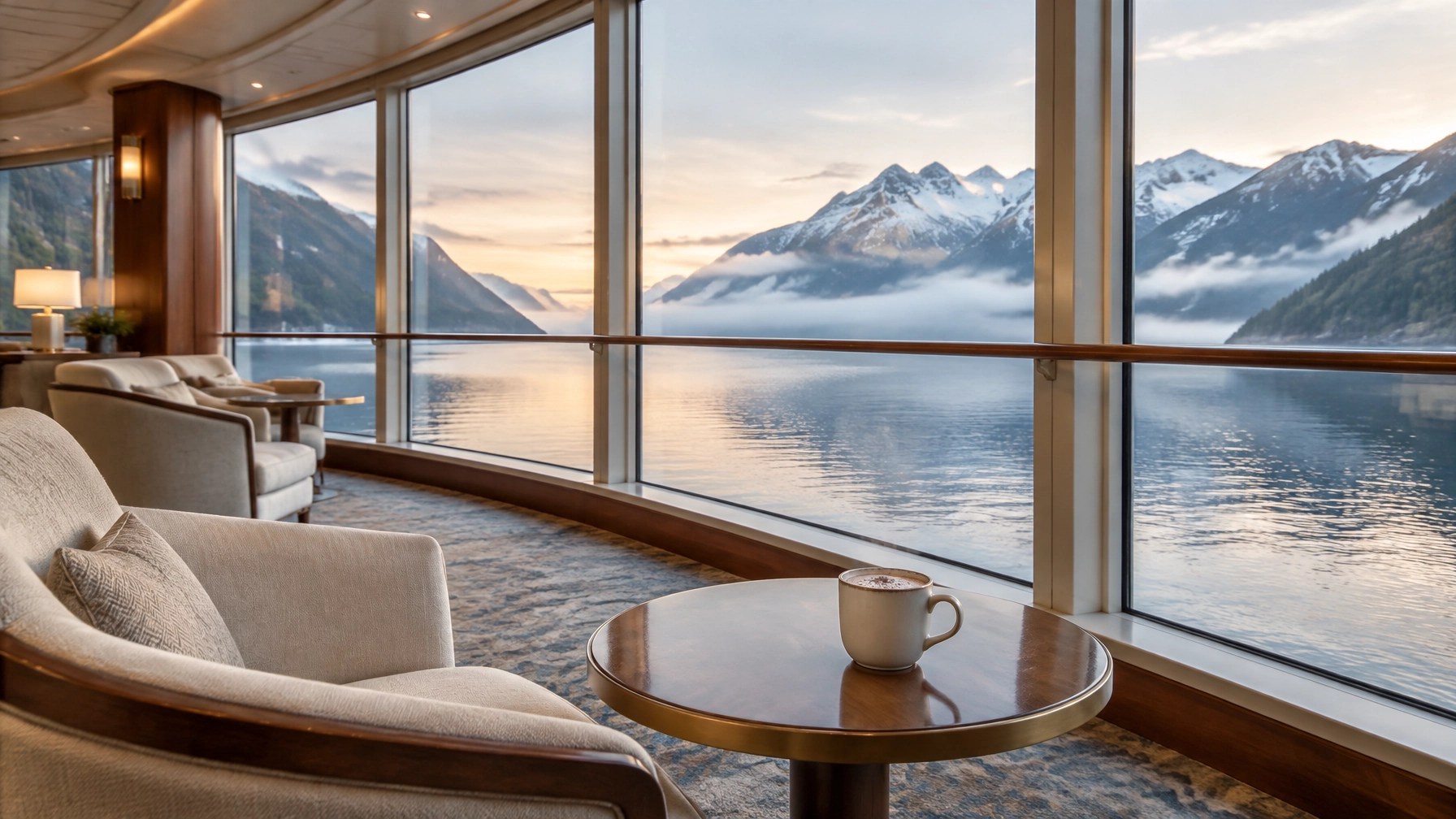
The early morning can feel like Alaska’s private invitation. Make your way to the observation lounge with a warm drink, find a window, and watch the fjord brighten from slate to silver. In quiet weather, the water may hold a soft reflection of the mountains. In mist, the scenery feels more intimate, as if the ship is moving through a watercolor.
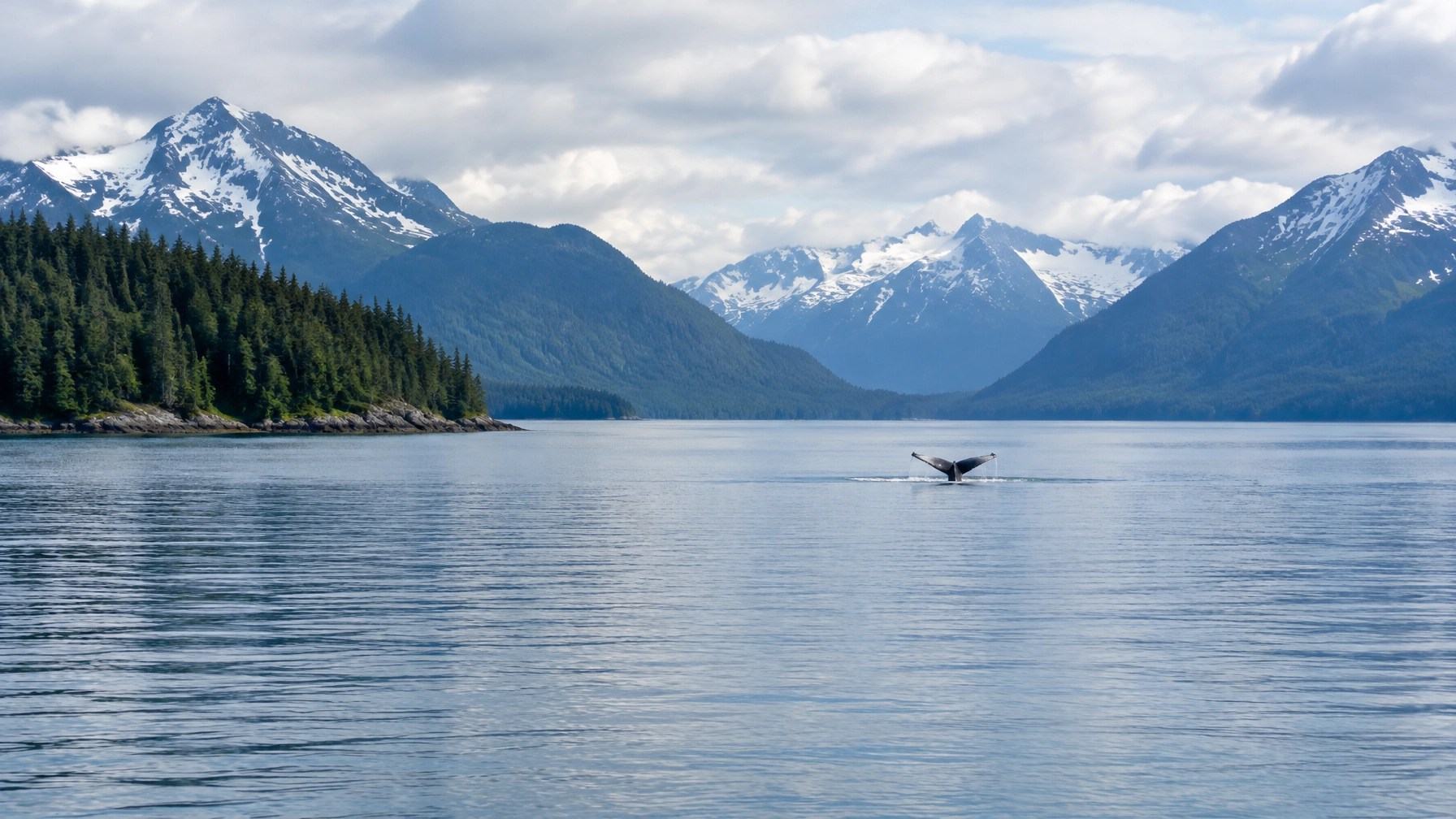
Then take your hot chocolate out on deck if conditions allow. The cold air sharpens the senses; the mug warms your hands; every breath feels fresh. You might spot a whale’s blow in the distance, an eagle above the shore, or a seal resting on a piece of ice. Wildlife sightings are never guaranteed, and the best approach is patient looking rather than expecting a close encounter.
Let the lounge be your sheltered base, not your only viewpoint. Window reflections can make photographs hazy, and being outside gives you a clearer sense of the surrounding landscape. Move between the warm interior and the open deck as you like: you don’t have to stand in the cold for hours to enjoy the day.
Your quiet-day rhythm: look, listen, and linger
One of the loveliest things about Alaska’s sea days is that you don’t have to fill every minute. Give yourself a loose plan, then leave space for the unexpected.
- Start slowly. Check the day’s program, look for ranger talks or scenic-cruising narration, and learn when the ship expects to be near a glacier.
- Keep binoculars close. Scan the shoreline, water, and ice edges. If you’re not sure what you’ve spotted, ask a ranger or crew member for help.
- Take short deck breaks. Step outside for a stretch of time, warm up, then return later. You’ll be more comfortable and ready to notice the next change in the view.
- Enjoy the ship between lookouts. Visit the library, listen to a talk, or book a spa treatment. A relaxing hour indoors doesn’t mean you’re missing Alaska. It helps make the day feel restorative as well as scenic.
- Let the view interrupt your plans. If an announcement calls attention to wildlife or a changing landscape, pause what you’re doing and take a look.
On a glacier day in Glacier Bay, rangers may share commentary and offer programs aboard the ship. Check your daily schedule for where and when to join in. The National Park Service’s Glacier Bay cruise guidance is also a useful preview of what to expect.
How to photograph glaciers without a telephoto lens
You don’t need a long camera lens to bring home beautiful glacier-day photos. A phone camera or standard lens is well suited to broad scenery: the glacier, the fjord, the ship’s wake, and the way mountains frame the water.
Try these simple ideas:
- Show the scale. Include a small section of ship railing or deck in the foreground, with the glacier beyond it.
- Photograph the whole scene. A wide view can tell the story better than a tightly zoomed image: ice, water, mountains, and sky together.
- Capture changing details. Take a few pictures as the light and clouds shift. The same view can feel entirely different an hour later.
- Use binoculars to look closer. For distant wildlife, enjoy the view through binoculars and photograph the broader setting. Avoid relying on heavy digital zoom; a modest crop later can work well.
- Protect your camera. Keep a lens cloth handy, guard your device from mist or spray, and bring a spare battery if you have one.
You may not fill the frame with a distant whale or eagle, and that’s perfectly fine. The most meaningful picture might be the wide, quiet scene that takes you back to how the morning felt. Always respect wildlife and keep your distance. The National Park Service specifically advises photographing bears with a telephoto lens rather than approaching them; from a ship, stay aboard and follow your crew’s guidance.
Layer for the view, not just the forecast
Alaska’s summer weather can be cool, damp, and changeable. The National Park Service notes that summer highs in Glacier Bay are commonly around 50–60°F, and rain is part of the coastal climate. A comfortable outfit makes it easier to stay outside when the scenery is at its best.
Pack a moisture-wicking base layer, a warm fleece or sweater, and a waterproof, wind-resistant outer layer. Add a warm hat and gloves, and choose shoes with good traction. Keep the layers you need in a small day bag rather than tucked away in your cabin. You can always remove a layer inside and add it again when you step back onto the deck.
For more preparation tips, read the park’s Glacier Bay safety guidance.
The “doing nothing” day you’ll remember
A sea day asks you to trade a checklist for attention. You notice the hush before a ranger’s announcement, the small wave of excitement when someone spots a whale, and the way a glacier’s blue tones change with the light. You read a few pages in the library, have something warm to drink, and return to the deck because the view has shifted again.
That is not doing nothing. It’s having time to be where you are.
If you’re ready to plan an Alaska cruise, I’d love to help you compare itineraries, scenic-cruising experiences, and the details that make the whole trip feel easy. Explore cruise offers or contact AHTRAVELSNYC to start planning with personal support from Ayesha H, NYC and Cruise Specialist. Let’s make your Alaska story unforgettable!
Leave a Reply