
Welcome to the New York many visitors miss: quiet, handsome blocks where the city’s story is written in brick, sandstone, iron railings, and the steps leading to the front door.
November is a lovely time to explore brownstone Brooklyn. The streets feel crisp and walkable, the last autumn leaves add a little color, and low afternoon sun brings out details you might miss in summer. Best of all, this is a neighborhood walk you can shape around your own pace: take in a few beautiful blocks, pause for a book or coffee, and still make it back to the subway without needing a spreadsheet.
I’m Ayesha H, AHTRAVELSNYC’s NYC & Cruise Specialist. I love helping visitors find the New York that feels personal, not just postcard-perfect. If you’re planning a city stay, let’s make room for a neighborhood afternoon that stays with you.
First, what exactly is a brownstone?
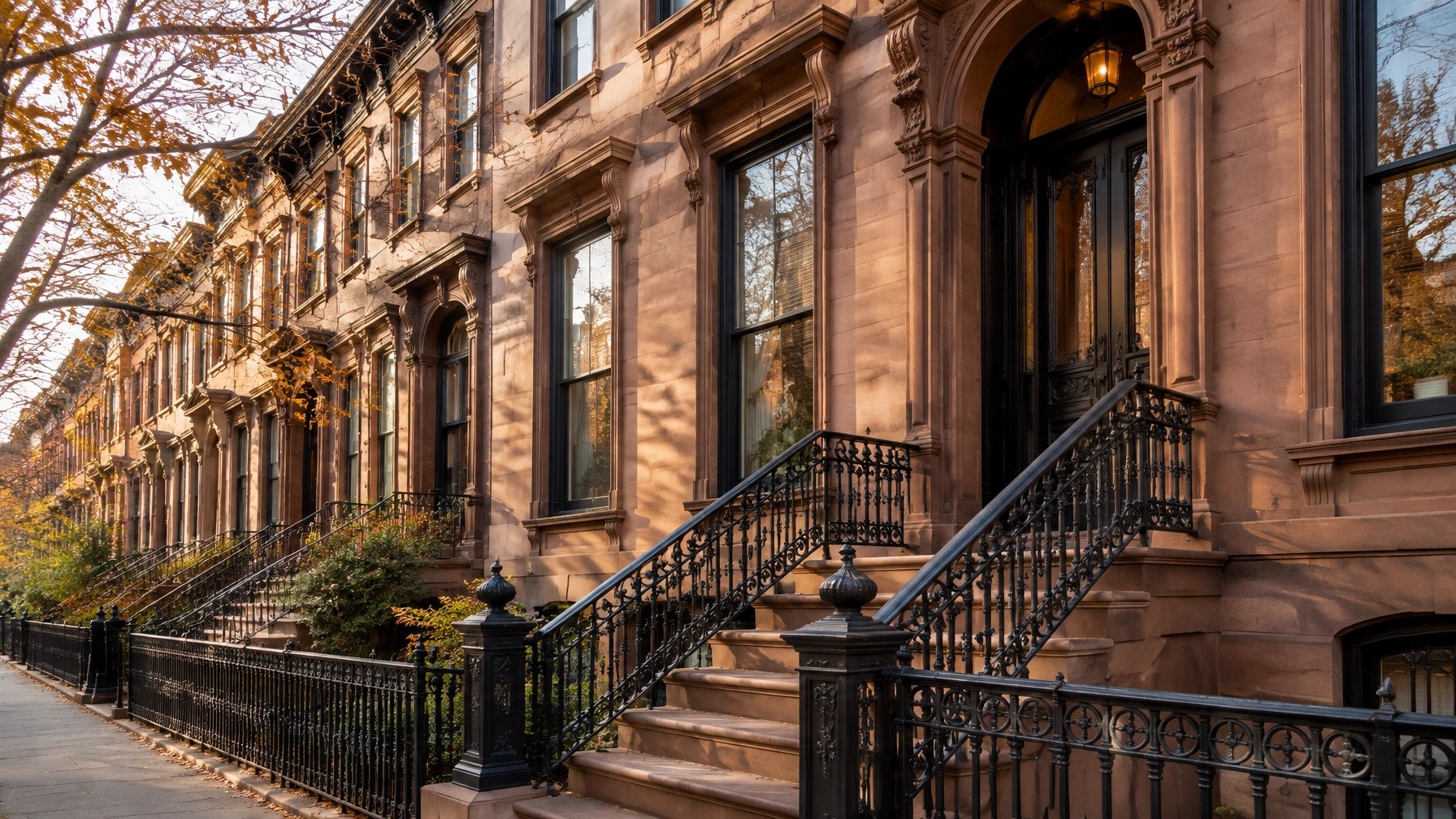
Brownstone is a type of sandstone used on building facades and stoops. In New York, the word is also used more broadly for the 19th-century row houses that give many residential blocks their distinctive look. Not every historic townhouse is faced in brownstone: you’ll see plenty of brick, too, and houses with stone details rather than an entirely brown facade.
The variety is part of the fun. Look up at the cornices, compare the window shapes, and notice how one block can shift from modest brick homes to richly detailed sandstone fronts. The New York City Landmarks Preservation Commission’s Brooklyn Heights Historic District report and Cobble Hill Historic District report are fascinating references if you’d like a deeper architectural look.
And the stoop? It’s the staircase rising from the sidewalk to an elevated entrance. The word comes from the Dutch stoep, meaning steps or porch. These high entrances helped distinguish the main living floor from the basement level and became one of the city’s most recognizable townhouse features. They also created a natural meeting place at the edge of home, though today, they’re best admired from the public sidewalk. A beautiful stoop is not an invitation to sit on someone’s steps. New York has many excellent places to rest that don’t belong to a stranger.
Why November is the sweet spot
In summer, leafy trees can hide the very architectural details you came to see. By November, bare branches open up the view: ironwork, carved door surrounds, tall windows and rooflines emerge against the sky. A few leaves often linger, just enough to soften the scene without screening it.
Then there’s the light. On a clear late afternoon, warm sun slides across the sandstone and picks out all those little details. It makes even a simple block feel cinematic, and you don’t need a film crew. (Good news: film crews rarely bring snacks.)
The practical bonus: a brisk walk feels refreshing rather than exhausting. Wear comfortable shoes, bring a warm layer, and check the forecast before you go. November can be bright and mild one day, breezy the next. Daylight also fades early, so aim to finish your outdoor wandering before dusk.
A simple walk: start at the subway, finish near coffee
For an easy first brownstone stroll, try Brooklyn Heights. Start near Clark Street station on the 2 or 3 train. Walk toward the Brooklyn Heights Promenade for a sweeping view over the river, then turn back into the quiet residential streets. Explore around Orange, Willow and Cranberry Streets before heading toward Montague Street, where you can browse or grab a warm drink.
This is a gentle route, not a march with a finish-line medal. Allow about an hour for the walk itself, then add time for photos and a comfortable café stop. Check the MTA subway map and live service information before setting out; service patterns can change, and the train that looked perfect on your screen may have other plans.
Want a longer outing? Think of the neighborhoods as separate chapters rather than trying to cram them all into one afternoon:
- Brooklyn Heights: Start with classic brownstone rows and the Promenade’s striking waterfront views.
- Cobble Hill: Continue on another day, or make it your main stop for intimate, tree-lined streets and varied 19th-century facades.
- Park Slope: Choose this neighborhood for longer blocks of handsome row houses and an easy finish near Prospect Park.
- Harlem: For another day, explore its own remarkable row-house streets in Manhattan. Harlem is a different neighborhood story, with its own deep cultural history, not a quick detour from Brooklyn.
Cobble Hill and Brooklyn Heights sit close enough to pair if you’re feeling energetic; Park Slope is a longer walk or a simple subway ride farther south. Harlem belongs on its own itinerary. A relaxed pace is the point, and your feet will thank you for not treating the subway map like a personal challenge.
What to notice on each block
Brooklyn Heights has an especially rich mix of old houses and architectural styles. The city’s landmarks report describes a neighborhood with brick and brownstone homes, churches and carriage houses, much of it built in the 19th century. Wander around Willow, Orange and Montague Streets and let the details reveal themselves.
Cobble Hill offers another rewarding variation. Its historic district report describes houses in styles ranging from Greek Revival to Italianate and Queen Anne. You don’t need to memorize the names. Just notice the differences: broad or narrow stoops, simple or ornate iron railings, rounded or sharply edged windows. You’ll start to see the block as a collection of individual personalities.
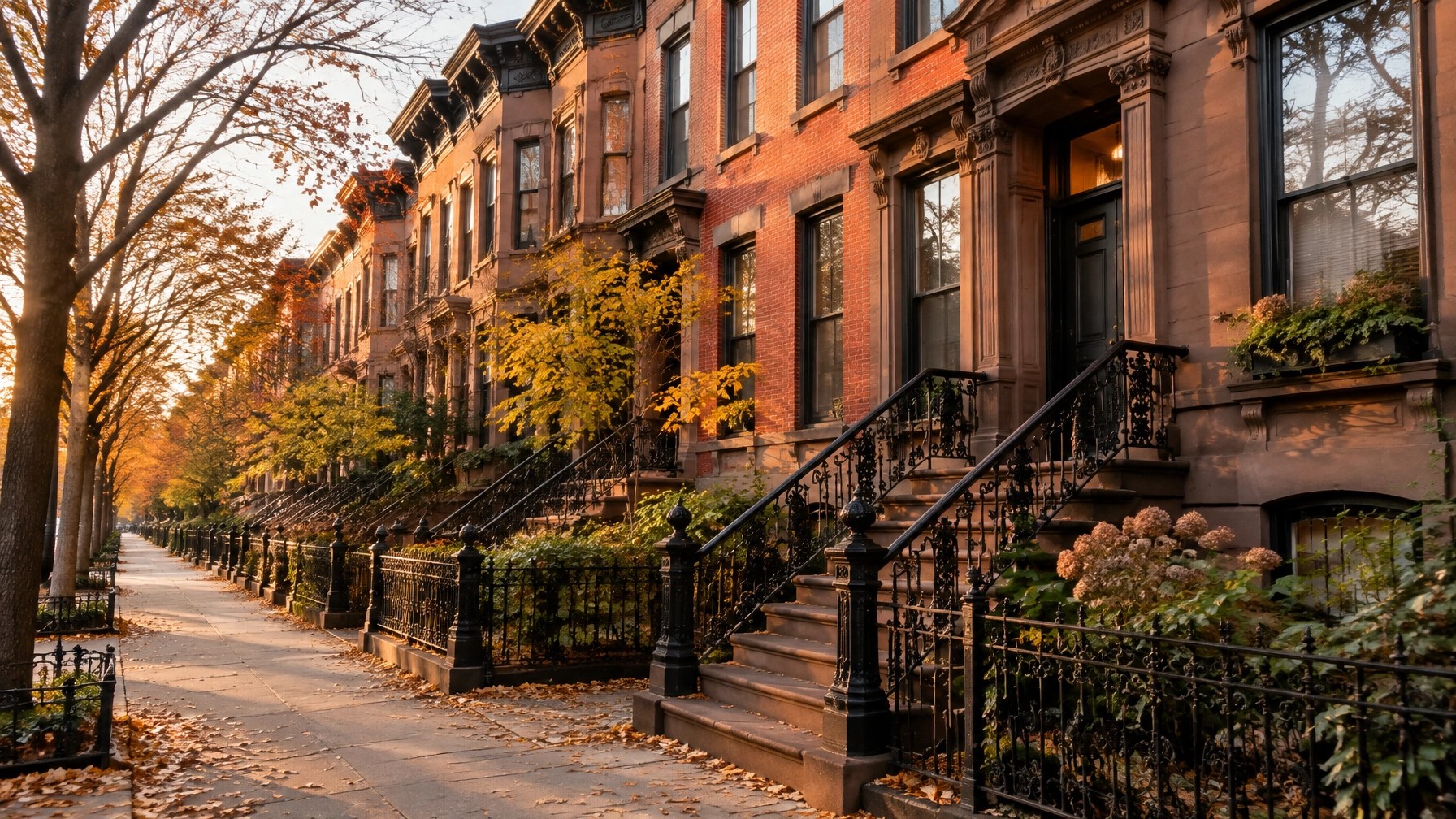
Park Slope brings its own long, handsome rows and a mix of architectural details. Choose a few blocks around the avenues and streets near Prospect Park, then finish with a park-side pause if the weather cooperates. Keep your route flexible: the best discovery may be the building you didn’t plan to find.
Where to stop: treats, pages and a warm drink
- For a bakery break: Pop into a neighborhood bakery for a pastry and something warm to sip. A flaky treat is an excellent walking companion and has never once asked you to check email.
- For an independent bookshop: Books Are Magic has Brooklyn Heights and Cobble Hill-area locations, including Montague Street and Smith Street. Browse for a new read, or simply enjoy a very civilized break from looking up at cornices.
- For coffee and a quick refuel: Pick a café near the end of your route rather than wandering hungry in search of the “perfect” one. In Brooklyn, that search can become its own walking tour. For a straightforward bakery-café option, Paris Baguette on Court Street serves coffee, pastries, bread and more.
Local tip: popular neighborhood spots can get busy, especially around lunchtime. If a table is full, keep walking a block or two. In New York, another good cup of coffee is rarely very far away.
Photography notes for November
Bring the good camera, or make sure your phone has room for more pictures. Late afternoon is the moment to catch warm light on the facades, while a slightly overcast sky can bring out the deep colors of brick and stone.
Try these simple shots:
- Frame a stoop with a few remaining leaves at the edge.
- Photograph a whole row of houses to show the rhythm of the block.
- Look for ironwork, old doorways and cornices you might otherwise walk past.
- Keep people’s homes private: photograph from the public sidewalk, avoid lingering at front doors, and never enter a stoop, yard or gated area.
Most of all, take a few pictures and then put the camera away. The best part of a neighborhood walk is being there, not trying to turn every block into a cover shoot.
A few practical tips before you go
- Wear comfortable shoes. Historic streets are a pleasure to explore, but they are still streets.
- Check subway service before leaving. Use the MTA map and service updates for the day of your walk.
- Keep the afternoon flexible. A bakery, bookshop or beautiful side street may earn an unplanned stop.
- Respect the residents. Keep voices low on quiet residential blocks, stay on public sidewalks and leave stoops for the people who live there.
- Bring a light layer. The temperature can feel different once the sun slips behind a row of houses.
Brownstone Brooklyn doesn’t ask you to hurry. It invites you to notice the carved stone, the changing ironwork, the last leaves on a bare branch, and the warm café waiting at the end. That’s a lovely way to understand New York: one block at a time.
Planning a New York stay? I’m Ayesha H, AHTRAVELSNYC’s NYC & Cruise Specialist, and I’d love to help shape a city itinerary around your pace, interests and travel plans. Visit AHTRAVELSNYC or email me to start planning. Let’s make your New York story unforgettable!
Leave a Reply